
When family members inherit property, one of the most common questions I hear is:
“Is there a difference between a probate sale and a trust sale — and does it matter for our timeline, costs, and net proceeds?”
The short answer: Yes — it matters a lot. Understanding which process applies can save your family time, money, stress, and confusion during an already emotional transition.
Let’s break it down clearly — especially for families here in Ventura County.
What Is a Probate Sale?
A probate sale happens when someone dies without a trust holding title to their property — even if there is a will. In California, a will alone does not avoid probate if the estate exceeds the state’s small-estate exemption (which is relatively low), and most Ventura County homes are above that threshold.
Here’s what probate involves:
✔ An executor or administrator is appointed by the Ventura County Superior Court
✔ The property must be appraised (sometimes by a court-appointed referee)
✔ The home is listed and marketed by a Realtor who specializes in probate
✔ An accepted offer often needs court confirmation
✔ At a hearing, other buyers may be allowed to bid higher (“overbidding”)
✔ Once confirmed, the sale closes and proceeds are distributed
What this means for sellers:
📍 Longer timeline — Probate sales can take 9–18+ months, depending on court schedules and estate complexity.
📍 Higher costs — Court fees, legal costs, and executor compensation take a bite out of the estate.
📍 Less control — The court oversees key decisions and sale approval.
Probate is designed to protect heirs and creditors, but the court involvement that creates fairness also creates delays and expenses.
What Is a Trust Sale?

A trust sale occurs when the property is already titled in a living trust before the owner’s death. This is a common and effective estate-planning tool.
In this case:
✔ The successor trustee (named in the trust) has the authority to sell without court involvement
✔ The sale follows traditional real estate practices: listing, offers, negotiation, and closing
✔ The trustee must still act in the best interest of beneficiaries and follow the trust terms
Benefits of a trust sale:
🏠 Faster process — No waiting on court calendars means closings often happen in 30–60 days instead of many months.
💰 Lower costs — No probate court fees or lengthy legal battles.
🔒 More privacy — Trust matters are not public record, like probate.
⚖️ Greater control — Trustees can negotiate and choose terms without court restraints.
A well-funded trust — where title is correctly transferred — allows families to avoid probate entirely and enjoy a smoother, more traditional real estate process.
Probate vs. Trust Sale — Key Differences
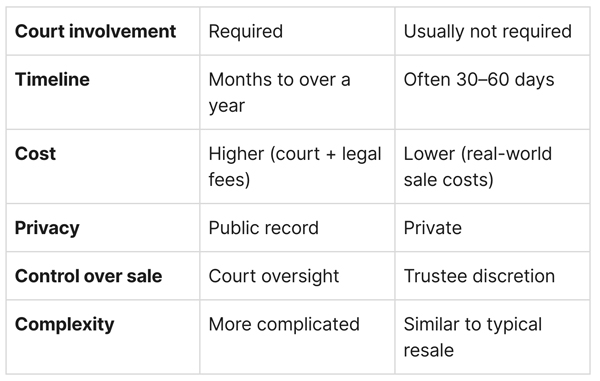
This comparison shows why many families find trust sales less stressful and more efficient — especially when paired with experienced estate-sale Realtors and attorneys.
Solutions & Smart Next Steps

If you’re selling property after a loved one’s death:
✔ Confirm whether the property is titled in a trust
✔ Gather trust documents, death certificate, and title records
✔ Consult a Probate & Trust Specialist Realtor (like me!)
✔ Work with an estate planning attorney to verify legal authority and requirements
If you’re planning ahead:
✔ Talk with an estate planning attorney about creating or updating a living trust
✔ Make sure real estate and other assets are properly funded into the trust
✔ Review successor trustee appointments and beneficiary instructions
Proper planning now can prevent months of stress later.
Experienced Help Matters
As a Realtor with 20+ years of experience, a Certified Probate & Trust Specialist, Certified Negotiation Specialist, and Certified Senior Real Estate Specialist, I guide families through these nuanced processes every day.
Whether you’re facing a probate sale, trust sale, or planning your estate to avoid probate entirely, I’d love to answer your questions and help you make the best choices for your goals.
👉 Contact me, Robbie Starr, for a free consultation and step-by-step guidance.



Leave a Reply